-
ProductsFocus on the development and manufacture of high temperature furnace monitoring and furnace thermal imager
-
IndustryFocus on the development and manufacture of high temperature furnace monitoring and furnace thermal imager
-
ApplicationsFocus on the development and manufacture of high temperature furnace monitoring and furnace thermal imager
-
-
BlogFocus on the development and manufacture of high temperature furnace monitoring and furnace thermal imager
-

-
Products
Focus on the development and manufacture of high temperature furnace monitoring and furnace thermal imager
Read More > -
Industry
Focus on the development and manufacture of high temperature furnace monitoring and furnace thermal imager
Read More > -
Applications
Focus on the development and manufacture of high temperature furnace monitoring and furnace thermal imager
Read More > -
About Us
Focus on the development and manufacture of high temperature furnace monitoring and furnace thermal imager
Read More > -
Blog
Focus on the development and manufacture of high temperature furnace monitoring and furnace thermal imager
Read More > -
Contact Us
Focus on the development and manufacture of high temperature furnace monitoring and furnace thermal imager
Read More >






Blog
Design of a high-temperature industrial television?
Summary: High-temperature industrial television refers to industrial television systems used in high-temperature conditions (above 60℃). To help more people become familiar with it, let's introduce the design of high-temperature industrial television. Let's take a look!
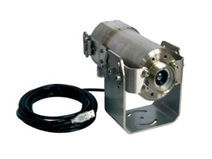
High-temperature industrial television Refers to industrial television systems used in high-temperature conditions (above 60℃). To help more people become familiar with it, let's introduce the design of high-temperature industrial television. Let's take a look!
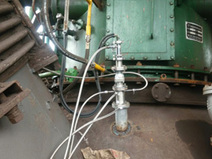
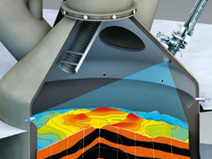
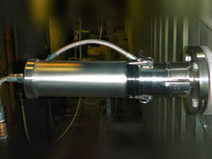
When designing high-temperature industrial television, the observation range must first be considered. To maximize the observation range, the camera or lens should be inserted into the furnace for observation. To reduce furnace heat dissipation and save energy, the size of the furnace wall opening should be minimized. Its cooling method is also unique. Since the furnace temperature in industries such as metallurgy and cement reaches approximately 1300℃ during normal operation, a cooling method must be used to ensure that the camera or lens can be inserted into the furnace for observation. Generally, there are two commonly used cooling methods: forced air cooling and water cooling.
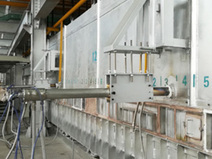
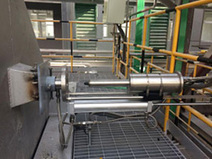
In forced air cooling, the cooling effect is similar to water cooling, but it is easy to use, easy to maintain, and not subject to geographical limitations. It can suppress the flames inside the kiln and block dust. Water cooling has high water source requirements, large maintenance (e.g., hard water can easily scale over time, affecting the cooling effect), and geographical limitations (e.g., water scarcity). In northern China, the winter temperature is low, and water pipes are prone to freezing and cracking, making it unsuitable for use. The transmission part of the high-temperature industrial television has been changed from the original BMX to a metal guide rail, making the equipment run smoothly and reliably, and greatly reducing the movement cycle of the probe cover (from the previous 1.5 minutes with screw transmission to less than 5 seconds). In addition, due to the use of a self-locking motor, the equipment can be used at any installation angle.
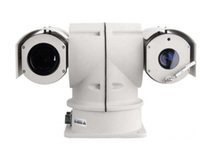
Regarding the camera lens of the high-temperature industrial television, in order to improve the imaging quality and expand its dynamic range of contrast, it is planned to use a Panasonic CP604 camera. The camera uses 24VAC and 12VDC power supply, which is safe. Because the temperature resistance of the lens is higher than that of the camera, only inserting the lens into the furnace is more conducive to heat dissipation. To improve the lens's ability to respond to changes in furnace illuminance at any time, a high-temperature pinhole lens with automatic aperture must be selected. Sapphire can withstand temperatures as high as 200°C. For the control method of the high-temperature industrial television, the head can automatically exit the furnace. To facilitate user operation of the probe's entry and exit, it should be controllable both on-site and in the probe room, enabling remote operation. For the control circuit, to ensure reliability and advancement, the control part uses PLC programmable control, greatly improving the system's operability and reliability. Users can freely program according to their own requirements to meet user needs.
Previous Page
Contact Us
Fax: 0519-86692128
Address: No. 108 Taihu West Road, Xinbei District, Changzhou, Jiangsu
Copyright: Changzhou Rongbang Automation Equipment Co., Ltd.