-
ProductsFocus on the development and manufacture of high temperature furnace monitoring and furnace thermal imager
-
IndustryFocus on the development and manufacture of high temperature furnace monitoring and furnace thermal imager
-
ApplicationsFocus on the development and manufacture of high temperature furnace monitoring and furnace thermal imager
-
-
BlogFocus on the development and manufacture of high temperature furnace monitoring and furnace thermal imager
-

-
Products
Focus on the development and manufacture of high temperature furnace monitoring and furnace thermal imager
Read More > -
Industry
Focus on the development and manufacture of high temperature furnace monitoring and furnace thermal imager
Read More > -
Applications
Focus on the development and manufacture of high temperature furnace monitoring and furnace thermal imager
Read More > -
About Us
Focus on the development and manufacture of high temperature furnace monitoring and furnace thermal imager
Read More > -
Blog
Focus on the development and manufacture of high temperature furnace monitoring and furnace thermal imager
Read More > -
Contact Us
Focus on the development and manufacture of high temperature furnace monitoring and furnace thermal imager
Read More >






Blog
What is the role of high-temperature industrial television in glass factories?
Summary: The combustion of the glass furnace allows the television to monitor the burning of the flame, comprehensively monitor the flow state of the glass liquid level, and monitor the operable working state, which is of great significance to improving the productivity and product quality of the industrial television.
The combustion in the glass furnace allows the television to monitor the flame combustion, comprehensively monitor the flow state of the glass level, monitor the operable working state, and improve High-temperature industrial television It is of great significance to improve productivity and product quality.
Problems to be solved by high-temperature industrial television:
1. Due to the high temperature of the furnace, the camera protective film must be cooled and co-cooled with water, and work normally at a furnace temperature of 1600℃.
2. Ensure the process structure and materials of the water-cooled cover. Otherwise, it is easy to burn water and damage the working state of the furnace.
3. Correctly select the installation location. Otherwise, the working surface cannot be observed.
4. Easy to maintain. If the equipment is used for a long time under high ambient temperature, it is easy to cause dirt accumulation, which leads to rapid daily maintenance. This is because the design of the equipment manufacturing needs to consider connectors that can be quickly inserted.
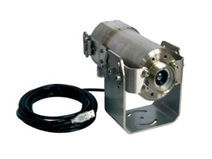
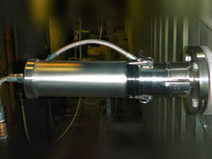
Real-time monitoring of the glass furnace status can clearly observe the bubble boundaries and the distribution of the material pile, as well as the working conditions of the combustion flame in each small furnace, and the wear and corrosion of the high-furnace wall in the glass melting furnace. High-temperature industrial television is used to observe and monitor the position of the wire drawing machine, fixture, and plate edge in the tin bath. Water-cooled protective film or pinhole protective film should be used. These cameras can be configured with single-ended, long-ended, long-terminal network topology connections or hard disk video systems to configure multimedia remote video monitoring systems.
Design considerations for high-temperature industrial television are as follows:
1. Observation range
(1) In order to expand the observation range as much as possible, the camera or lens should be extended into the furnace for observation.
(2) In order to reduce furnace heat dissipation and save energy, the size of the furnace wall opening should be minimized.
2. Cooling method
Since the furnace temperature of metallurgy, cement and other industries reaches about 1300℃ during normal operation, cooling measures must be taken to ensure that the camera or lens can reach the furnace for observation. Generally, there are two commonly used cooling methods: forced air cooling and water cooling.
A. Forced air cooling
The cooling effect is similar to water cooling, but it is easy to use, easy to maintain, and not subject to geographical restrictions. It can also suppress the flame in the kiln and block dust.
B. Water cooling
It has high requirements for water sources, large maintenance (if hard water is used, it is easy to produce scale in a long time, which will affect the cooling effect), and is subject to regional restrictions (such as the lack of water resources in North China, low winter temperature, and easy freezing and cracking of water pipes, so it should not be used).
3. Transmission mode
The driving part is changed from the original small vehicle drive to metal rail drive, so that the equipment can enter and exit smoothly and reliably, and the moving cycle of the probe cover can be greatly shortened (from the previous 1.5 minutes of screw drive to within 5 seconds). In addition, due to the use of self-locking motors, the equipment can be used at any installation angle.
4. Camera lens
A. In order to improve image quality and expand its dynamic lighting range, it is recommended that the camera use 24V AC and 12V DC power supply, which is safer.
B. Since the temperature resistance of the lens is higher than that of the camera, it is more convenient to cool the lens only when the lens extends into the furnace, and in order to improve the ability of the lens to reflect the changes in the furnace lighting at any time, a high-temperature pinhole lens with automatic aperture should be selected, and the lens end face is made of sapphire, which can withstand a high temperature of 200℃.
5. Control method
A. To ensure that the probe is in a cooling protection state during normal observation in the furnace, it must be ensured that the probe can automatically exit the furnace when the power is off and the gas is stopped.
B. For the convenience of users to operate the probe in and out, it must be able to be controlled on site and in the probe room to achieve remote control operation.
6. Control circuit
In order to ensure reliability and advancement, the control part adopts PLC programmable control, which greatly improves the operability and reliability of the system. Users can freely program according to their own requirements to meet the needs of users.
Contact Us
Fax: 0519-86692128
Address: No. 108 Taihu West Road, Xinbei District, Changzhou, Jiangsu
Copyright: Changzhou Rongbang Automation Equipment Co., Ltd.