

-
ProductsFocus on the development and manufacture of high temperature furnace monitoring and furnace thermal imager
-
IndustryFocus on the development and manufacture of high temperature furnace monitoring and furnace thermal imager
-
ApplicationsFocus on the development and manufacture of high temperature furnace monitoring and furnace thermal imager
-
-
BlogFocus on the development and manufacture of high temperature furnace monitoring and furnace thermal imager
-

-
Products
Focus on the development and manufacture of high temperature furnace monitoring and furnace thermal imager
Read More > -
Industry
Focus on the development and manufacture of high temperature furnace monitoring and furnace thermal imager
Read More > -
Applications
Focus on the development and manufacture of high temperature furnace monitoring and furnace thermal imager
Read More > -
About Us
Focus on the development and manufacture of high temperature furnace monitoring and furnace thermal imager
Read More > -
Blog
Focus on the development and manufacture of high temperature furnace monitoring and furnace thermal imager
Read More > -
Contact Us
Focus on the development and manufacture of high temperature furnace monitoring and furnace thermal imager
Read More >






Blog
Furnace Flame Television: How to Achieve High-Temperature Furnace Flame Monitoring?
Summary: Furnace Flame Television: How to Achieve High-Temperature Furnace Flame Monitoring? This article introduces the principle and application of high-temperature cameras, as well as how to select suitable cameras and arrange and adjust their positions. Through high-temperature furnace flame monitoring, production efficiency can be improved, energy consumption reduced, safety risks minimized, and higher safety and efficiency brought to industrial production.
Furnace flame television is an advanced device used to monitor flames inside high-temperature furnaces. It uses high-temperature camera technology to achieve real-time monitoring and analysis of flames within the furnace. This article will introduce the principles and applications of high-temperature cameras, and how to achieve high-temperature furnace flame monitoring.
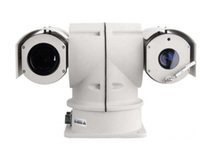
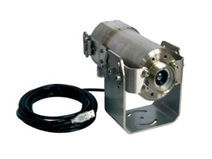
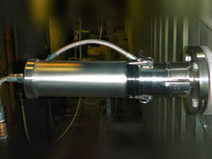
A high-temperature camera is a camera device specifically designed for high-temperature environments. It uses special materials and structures to function normally under high-temperature conditions and obtain clear images. High-temperature cameras typically have high fire resistance and high-temperature resistance, and can operate in high-temperature environments above 1000 degrees Celsius.
High-temperature cameras have a wide range of applications, one of which is flame monitoring inside furnaces. The furnace flame television system achieves real-time monitoring and analysis of flames by installing a high-temperature camera inside the furnace. The images obtained from the high-temperature camera can help operators understand the flame conditions inside the furnace, promptly detect anomalies, and take appropriate measures.
The key to achieving high-temperature furnace flame monitoring is to select a high-temperature camera suitable for high-temperature environments and to reasonably arrange and adjust the camera's position. When selecting a high-temperature camera, factors such as its fire resistance, high-temperature resistance, and image resolution need to be considered. At the same time, it is also necessary to reasonably arrange and adjust the camera's position based on the specific furnace structure and operating conditions to ensure that the flame conditions can be comprehensively monitored.
The advantages of high-temperature furnace flame monitoring are obvious. First, it can achieve real-time monitoring of flames, helping operators understand flame conditions. If flame abnormalities are detected, measures can be taken promptly to prevent accidents. Second, high-temperature furnace flame monitoring can improve production efficiency and reduce energy consumption. By monitoring and analyzing flame conditions, the combustion process can be optimized, combustion efficiency can be improved, and energy consumption can be reduced. Finally, high-temperature furnace flame monitoring can reduce safety risks. Timely detection of flame abnormalities can prevent accidents such as fires and explosions, ensuring production and personnel safety.
In summary, high-temperature furnace flame monitoring is an important task that can improve production efficiency, reduce energy consumption, and reduce safety risks. By selecting a high-temperature camera suitable for high-temperature environments and reasonably arranging and adjusting the camera's position, accurate monitoring and analysis of high-temperature furnace flames can be achieved. The application of furnace flame television systems will bring higher safety and efficiency to industrial production.
Contact Us
Fax: 0519-86692128
Address: No. 108 Taihu West Road, Xinbei District, Changzhou, Jiangsu
Copyright: Changzhou Rongbang Automation Equipment Co., Ltd.



